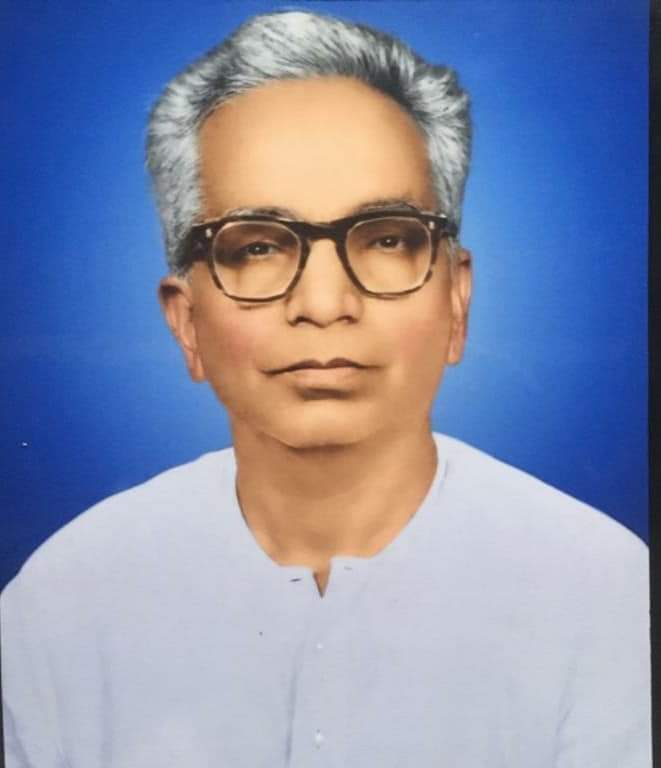
Hyderabad, September 16th 2026: In the summer of 1932, a teenager from Hyderabad, swayed by the call of civil disobedience and salt satyagraha given by Mahatma Gandhi left home, to Mumbai to participate in the movement. He had not imagined the consequences.
A few days into April, the 16 year old, Alwala Bal Reddy was arrested and imprisoned in the infamous Yerawada prison of Pune. After six months of struggle in inhuman conditions, he was set free.
There was no looking back thereafter. The impact and call for Independence was so strong that the young man decided to follow the path of Gandhiji. He returned to Hyderabad to continue the struggle for freedom and took up the cudgels against the Nizam of Hyderabad. During this period, he came into contact with Arya Samaj and Pandit Narendra.
During the next couple of decades this fiery, young man with fire in his belly turned into a prominent Arya Samaj leader, social reformer, and an orator. He played a prominent role in the Freedom Movement and liberation of Hyderabad. He worked under the leadership of Swami Ramanand Tirtha, the President of Hyderabad State Congress and also under Pandit Narendra ji, the great Arya Samaj leaders.
During the two decades spanning 1930 to 1950, Bal Reddy with his life at stake, resisted the dreaded Razakars and sacrificed family responsibilities for the benefit of society. However, Alwala Bal Reddy, who passed away in 1992 at the age of 76 remains one of the unsung heroes.
Rise to Prominence & Participation in Hyd Liberation Movement:
A significant event that brought Bal Reddy into the limelight in the Arya Samaj movement in the Deccan happened on October 24, 1938. The Arya Samaj decided to offer Satyagraha against the Nizam Government. It was decided to oppose the conversion policy of the Nizam Government. Satyagrahis participated in large numbers. Bal Reddy was one of them. He was inspired by the slogans such as ‘ India for Indians and ‘Back to the Vedas’ given by the Arya Samaj founder, Swami Dayanand Saraswati.
The Arya Samajists had assumed the responsibility of the protection of Hindu community during the last stages of the Nizam’s rule, especially the 1940’s, which saw turmoil in the richest princely state. The Seventh Nizam, Mir Osman Ali Khan was losing hold and various unsocial elements were gaining a stranglehold. Among them, the most notorious and feared were the Razakars.
The Arya Samaj launched the renaissance Movement in Hyderabad and severely opposed the Nizam rule. It served as a training ground for the nationalists of Hyderabad. The Samaj was determined to assert the religious and civil rights of the people of Hyderabad.
During that period Hindu women were kidnapped, raped and converted to Islam by the Razakars. The Arya Samaj launched the Shuddhi Programme to counter this atrocity and assault. Alwala Bal Reddy’s contribution to the success of the ‘Shuddhi Programme’ and boldly confronting the Razakars is immense and lasting.
He scaled up the shuddi programmes by converting outcasts from other religions to Hinduism. Thereafter, he helped integrating them into the mainstream community by elevating their position, and instilling self-confidence and self-determination by imparting Vedic knowledge.
Interestingly, the hub for all these activities was the Umda Bazaar Mandir. In this spacious temple the activists aided in performing marriages, including widow remarriages which was a very bold step in those times. In addition, women were also given shelter and protection.
Bal Reddy also trained the youth in self-defence against the Razakars. He established Arya Samaj Mandirs and Akharas/Vyamshalas (gymnasiums) for youth in various places. Arya Veer Dal of Umda Bazar was a popular force of that time. It was also known for its social service.
Throughout his life Alwala Bal Reddy strived to build a caste less society. He fought for women empowerment and promoted education to the underprivileged. In 1934 he founded a night primary school for Harijans. In 1949 he established Kasturbha school for girls in Umdabazar and Doodhbowli of the old city of Hyderabad.
He is known for his stand for the dignity of individuals and for his opposition to injustice to people or downward masses. These vibrant activities led by Bal Reddy were seen as acts of offence by the Nizam Government.
A Fiery Orator:
Alwala Bal Reddy, the third son to smt Narsamma and Mr Malla Reddy, born in 1916 was an orator. His fiery speeches mainly focussed on highlighting the injustices perpetrated during the Nizam Rule. Several youths were influenced by the principles and values he espoused.
One of the landmark speeches actually led to his arrest in 1942. It was a public speech during the Ganesh Festival, which moved the people into joining the Quit India call given by Mahatma Gandhi.
A consequence of the speech was the then Police Commissioner issuing a circular prohibiting Bal Reddy from making any public speeches and writings. It did not deter him but emboldened him further in achieving the goal of freedom.
The Political Problems and Agitations:
The political problems in Hyderabad during those times were mainly due to the imposition of minority Muslim rule over the majority Hindus.The Nizam wanted to establish Islamic State. Therefore, he denied even basic civil, religious and human rights to non-Muslims of Hyderabad. Over 85% of the population of Hyderabad was Hindu while the rest comprised Muslims, Christian and other religions.
To achieve his objective the Nizam encouraged Ittehad to start Tableegh. He issued Farmans (orders) which favoured conversion. The Mafusa Act protected the property of the Muslims and the Muslim-converts. The GayarMafusa Act protected the property acquired by the Muslims who purchased the lands of the Hindus which was mortgaged to them on their debt.
Arya Samaj agitated against these discriminatory orders of the Nizam. Few Aryasamajis formed a militant group and embraced path of violence (they went underground too). Their most impactful action happened on December 4, 1947 near the King Koti Palace. It is considered a turning point in the Liberation of Hyderabad.
A group led by Mr Narayan Rao Pawar and two others (jagadish Arya and Gandaiah Arya), threw a bomb on the Nizam on 4th December 1947. The Nizam survived but the samajists were arrested. The sessions court awarded Narayan Rao, the death sentence and life sentence to Jagdish arya. Alwala Bal Reddy was arrested from his native village Gundlapochampalli (Medchal) on the charges of making the bombs.
Bal Reddy was preparing bombs to resist the razakars attacks on the villages and also to mount attacks on various properties of the Nizam. His earlier connections with the communists helped him to make the explosives. He was tried on charges of sedition and abetting attempts to kill the Nizam and imprisoned.
The Nizam’s men were merciless in his arrest. They burnt his house and his family was tortured without showing any pity on children and women. Even shelter was denied to his family in his native village of gundlapochampally.
With the situation worsening and the Nizam refusing to accede, the Government of India sent its troops on September 13, 1948. Through ‘Operation Polo’ or Police Action, the Hyderabad State was liberated and integrated into the Country on September 17th 1948 under the orders of the Home Minister, Sardar Patel.
Bal Reddy along with several arrested Arya Samaj and Congress leaders were released in 1948.
Social Service till the Last:
Bal Reddy embarked on a new phase of social service. He served in the first Municipal corporation of Hyderabad then popularly called as Baldia. He was elected unanimously representing congress party for two terms consecutively (1951-56). During that period he ensured landless poor to get land for agriculture in Bahadurpur area.
In the political and trade union sphere Bal Reddy served as secretary to Gumastha association and general secretary, Hyderabad trade union congress from 1942-1954 .
Along with prominent leaders like G.Venkatswami and T.Anjiaah, during the tenure of Burgula Ramakrishna Rao as CM , he was active in the union activities and also closely associated with several leaders like Marri Channa Reddy, Ramachandra Rao Kalyani etc.
By Somasekhar Mulugu, Senior Journalist