Manipur’s Handloom Heritage, Sustainable Indian Design and Meghalaya’s Ryndia Silk Take the Spotlight in St. Petersburg Through International Reinvent Northeast Season 9
NEW DELHI, INDIA / ST. PETERSBURG, RUSSIA, OCTOBER 2026: DFC Delhi Fashion Week, an initiative of Delhi Fashion Club, marked an important milestone in its international journey through its participation in the 31st Admiralty Needle International Fashion, Art & Design Festival, held in St. Petersburg, Russia, from October 19 to 22, 2026.
Led by Indian fashion entrepreneur and international fashion director Harshit Dhingaun, Chairman and Founder of Delhi Fashion Club and founder of DFC Delhi Fashion Week, the initiative brought Indian fashion, Northeast India’s traditional textile heritage and sustainable design to an international audience through International Reinvent Northeast Season 9.
Dhingaun led and directed the Delhi Fashion Week international segment, presenting two Indian designers: Lairenlakpam Lily Chanu from Manipur and Kajal from Delhi. Alongside the runway presentation, he conducted a special masterclass for students at St. Petersburg State University of Industrial Technologies and Design, introducing India’s textile heritage with a special presentation on Meghalaya’s indigenous Ryndia silk.
The initiative combined fashion presentation, textile education and cultural exchange, highlighting the potential of Indian fashion to build international creative connections while promoting the country’s diverse regional traditions.
Harshit Dhingaun Leads India’s Fashion Presentation in Russia
Harshit Dhingaun served as International Fashion Director for the Delhi Fashion Week segment and Show Director for the international presentation at the Admiralty Needle festival. He also participated as a jury member in the festival’s designer competition.
Through Delhi Fashion Week and International Reinvent Northeast, Dhingaun has sought to create international opportunities for Indian designers and promote the textile heritage, craftsmanship and creative talent of Northeast India.
The Russian presentation brought together different dimensions of India’s fashion identity: Manipur’s traditional handloom heritage and contemporary sustainable design from Delhi.
The initiative aimed to demonstrate how indigenous textiles and modern design can complement one another, creating opportunities to introduce India’s cultural diversity to international fashion audiences.
Beyond the runway, the educational masterclass extended this effort by introducing Indian textile traditions to students in Russia, connecting fashion with cultural learning and the exchange of design knowledge.Together, the activities formed part of Dhingaun’s broader vision of using fashion as a medium for international cultural exchange and the promotion of Indian craftsmanship.
Manipur’s Handloom Heritage Shines Through Designer Lily Chanu
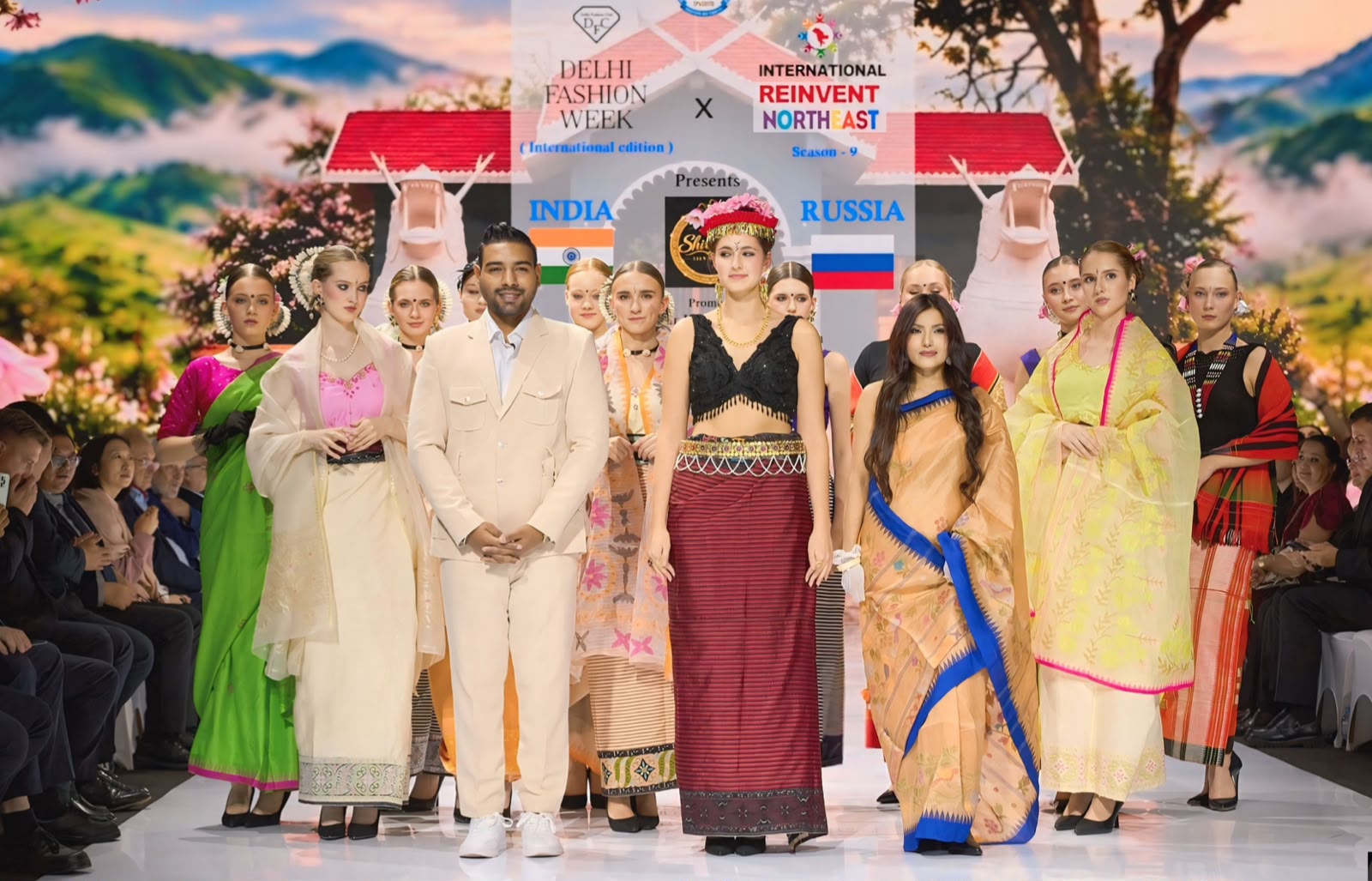
A major highlight of the Indian fashion presentation was the collection by Lairenlakpam Lily Chanu, founder of Shiroi Lily Closet, Imphal, Manipur.
Her collection, titled “THREADS OF MANIPUR – A LEGACY OF HERITAGE & ELEGANCE,” celebrated Manipur’s traditional handloom heritage, cultural identity and distinctive textile craftsmanship.
Presented under Delhi Fashion Week’s international initiative, the collection brought Manipur’s textile traditions to the international runway, offering audiences an opportunity to appreciate the region’s rich cultural and creative heritage.
The collection also drew inspiration from the iconic Shiroi Lily, associated with Ukhrul district of Manipur. By connecting regional identity and traditional craftsmanship with contemporary fashion, the presentation highlighted the potential of indigenous textiles to reach audiences beyond India.
The showcase aimed to create greater visibility for Manipur’s designers and handloom traditions while recognising the importance of preserving the weaving knowledge and craftsmanship passed down through generations.
For Northeast India, international platforms such as this offer opportunities to present regional cultural heritage within wider conversations about fashion, design and sustainability.
Through Lily Chanu’s collection, Delhi Fashion Week sought to highlight Manipur’s creative identity and the importance of incorporating traditional textiles into contemporary fashion presentations.
Designer Kajal Presents Contemporary Sustainable Fashion
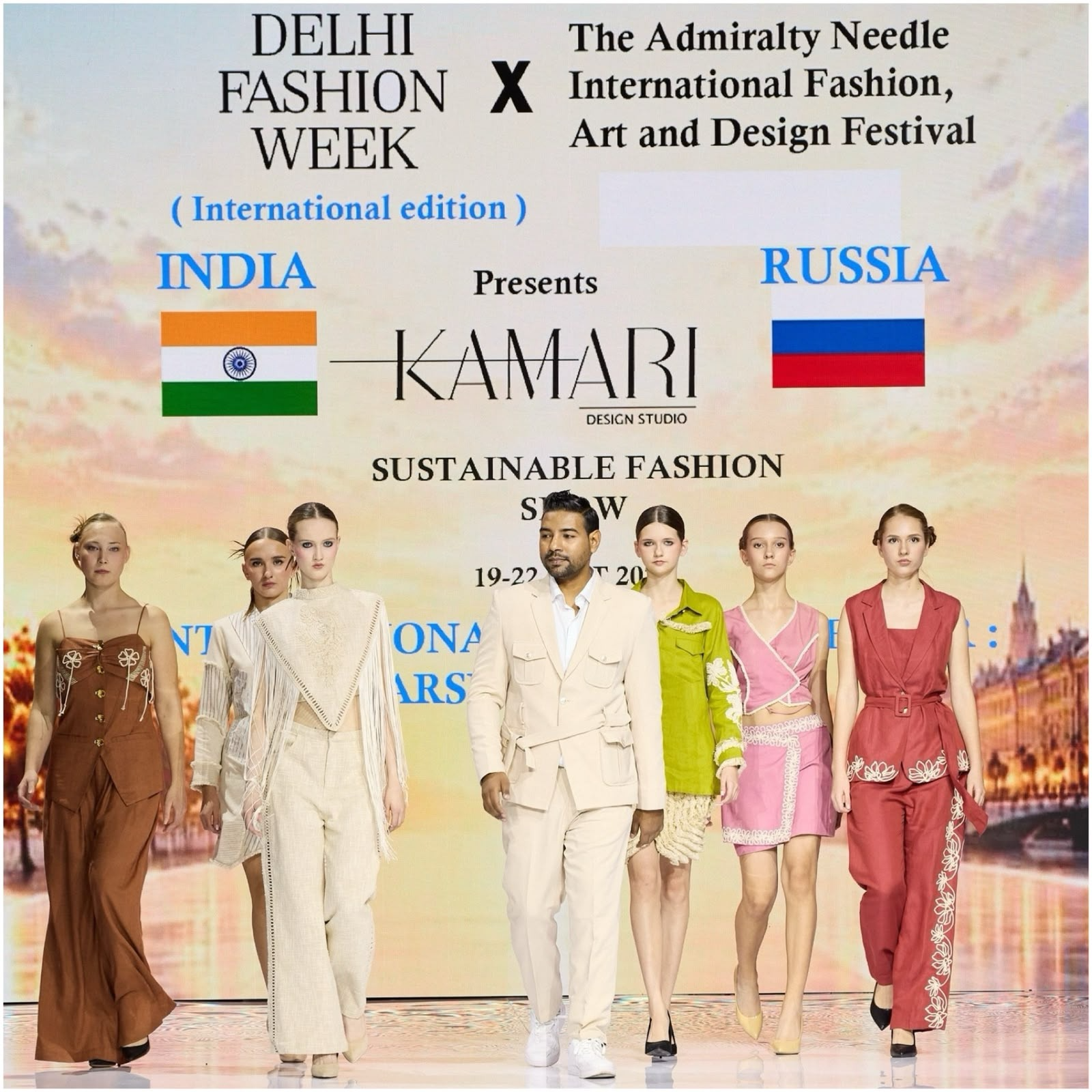
The Indian presentation also featured designer Kajal from Delhi, whose work brought a contemporary design perspective to the Delhi Fashion Week segment.
Representing her brand, Kamari, Kajal contributed to the presentation’s focus on sustainable design and the evolving relationship between fashion, responsible creativity and modern aesthetics.
Sustainability has become an important consideration in the international fashion industry, encouraging designers to explore thoughtful material choices, responsible production practices and approaches that value longevity and craftsmanship.
Kajal’s participation complemented the showcase of Manipur’s handloom heritage, presenting two distinct yet complementary dimensions of Indian fashion.
Together, the designers highlighted India’s creative diversity, from traditional regional textiles to contemporary sustainable design.
Their participation reflected Delhi Fashion Week’s objective of creating international opportunities for designers whose work contributes to India’s evolving fashion landscape.
Harshit Dhingaun Presents Indian Textile Masterclass in St. Petersburg
Extending the initiative beyond the runway, Harshit Dhingaun presented a special masterclass on Indian textiles for students at St. Petersburg State University of Industrial Technologies and Design.
The session focused on India’s diverse textile traditions, indigenous craftsmanship and the cultural significance of traditional fabrics. It introduced students to the relationship between textiles, regional identity, traditional knowledge and contemporary fashion design.
A special highlight was Ryndia silk from Meghalaya, an important part of the state’s indigenous Eri silk tradition.
The presentation, titled “India: The Land of Diversity — Ryndia, the Fabric of Peace,” highlighted the cultural heritage associated with Meghalaya’s traditional silk and its potential to connect indigenous craftsmanship with contemporary design and international cultural exchange.
Through the masterclass, Dhingaun introduced the textile’s regional significance and highlighted the traditional knowledge and weaving practices associated with India’s indigenous fabrics.
The session aimed to encourage greater international appreciation of India’s textile heritage while demonstrating how traditional materials can inspire designers, students and creative practitioners.
The presentation also connected textile education with the promotion of Meghalaya’s cultural identity. By introducing Ryndia silk to a Russian academic audience, the initiative sought to raise awareness of Meghalaya’s weaving traditions, indigenous crafts and potential for cultural tourism.
The masterclass complemented the runway presentation by demonstrating that fashion diplomacy extends beyond fashion shows. Educational engagement can also help communicate the stories, craftsmanship and cultural knowledge behind traditional Indian textiles.
Through this initiative, Delhi Fashion Week sought to highlight the importance of preserving indigenous textile traditions while creating opportunities for international learning and collaboration.
Promoting Meghalaya’s Textile Heritage and Cultural Tourism
Meghalaya’s indigenous textile traditions form an important part of the cultural diversity of Northeast India. Its Eri silk heritage, including Ryndia, reflects the relationship between traditional weaving, regional identity and local craftsmanship.
The special presentation in St. Petersburg offered an opportunity to introduce this textile heritage to an international academic audience and highlight its significance beyond the fashion industry.
By connecting textile education with cultural exchange, Dhingaun sought to encourage interest in Meghalaya’s traditional crafts and the communities that sustain them.
The presentation also demonstrated the potential of indigenous textiles to support cultural tourism by drawing attention to the people, places, traditions and skills behind the finished fabric.
Greater international awareness of regional textiles can create opportunities for cultural understanding and future engagement with India’s handloom communities.
The initiative was intended to promote awareness of Meghalaya’s textile heritage and cultural identity internationally. Any future commercial, tourism or institutional collaborations would depend on further engagement with relevant stakeholders.
Fashion as a Bridge Between India and Russia
The Delhi Fashion Week segment at the Admiralty Needle International Fashion, Art & Design Festival provided an opportunity to introduce Indian designers and textile traditions to an international creative environment.
Fashion offers a distinctive medium through which countries can share their cultural identities, artistic traditions, craftsmanship and contemporary design perspectives.
Through International Reinvent Northeast Season 9, Dhingaun sought to use fashion as a platform for connecting Indian and international creative communities.
The initiative brought together runway presentation, designer participation and textile education, illustrating how fashion can support dialogue between different cultures.
The combination of Manipur’s handloom heritage, Delhi’s contemporary sustainable design and Meghalaya’s Ryndia silk presentation highlighted the diversity of India’s textile traditions.
Dhingaun also expressed appreciation for the warmth and hospitality extended by the Russian people during the Indian delegation’s visit and his interest in exploring further opportunities for cultural exchange through fashion and design.
Delhi Fashion Week Expands Its International Vision
Organised by Delhi Fashion Club, DFC Delhi Fashion Week aims to create opportunities for designers, models, fashion professionals and creative entrepreneurs through fashion showcases and related industry initiatives.
Its international activities reflect an ambition to connect Indian fashion with global creative networks while promoting regional craftsmanship, sustainable design and emerging talent.
Through International Reinvent Northeast, the platform places particular emphasis on the textile heritage and creative contributions of Northeast India.
The initiative seeks to create opportunities for designers from the region to present their work internationally while raising awareness of the cultural traditions that inspire their collections.
The Russian edition extended this vision across several areas: the international presentation of Indian designers, the promotion of Manipur’s handloom heritage, the showcasing of contemporary sustainable design and the educational presentation of Meghalaya’s Ryndia silk.
Together, these activities represented a broader effort to bring Indian fashion and textile heritage into international creative conversations.
Harshit Dhingaun on India’s International Fashion Journey
Speaking about the initiative, Harshit Dhingaun said:
“Representing Indian fashion in Russia through Delhi Fashion Week has been a meaningful experience. Fashion is much more than a runway presentation; it is an opportunity to share our heritage, celebrate our diversity and bring people from different cultures closer together.
“Through International Reinvent Northeast, our objective is to create opportunities for Indian designers and bring greater international visibility to the rich textile and cultural traditions of Northeast India.
“Presenting Manipur’s handloom heritage on an international runway and introducing Meghalaya’s Ryndia silk to students in St. Petersburg allowed us to share different dimensions of India’s textile identity.
“I believe our traditional craftsmanship, indigenous textiles and contemporary design talent deserve greater international recognition. I am grateful to our Russian hosts for their hospitality and look forward to developing further opportunities for cultural exchange and collaboration between India and Russia.”
A Shared Vision for Cultural Exchange and Indian Design
The Russian edition of Delhi Fashion Week brought together Indian fashion, traditional textile heritage and contemporary sustainable design within an international festival setting.
The participation of Lairenlakpam Lily Chanu and Kajal showcased different dimensions of India’s creative identity, while Dhingaun’s leadership connected the runway presentation with a wider initiative promoting Indian cultural heritage.
The textile masterclass added an educational dimension by introducing Meghalaya’s Ryndia silk and India’s indigenous textile traditions to students in St. Petersburg.
For Delhi Fashion Club, the broader objective is to create opportunities through which Indian designers, artisans and creative entrepreneurs can connect with international audiences and contribute to global fashion conversations.
Through its international initiatives, DFC Delhi Fashion Week seeks to promote India’s cultural diversity, encourage recognition of indigenous craftsmanship and strengthen creative connections across national boundaries.
From Delhi to St. Petersburg, the initiative brought Indian fashion, Manipur’s handloom heritage and Meghalaya’s Ryndia silk into an international conversation, demonstrating the potential of fashion and textile education to connect cultures and promote India’s creative heritage.
About DFC Delhi Fashion Week
DFC Delhi Fashion Week is an initiative of Delhi Fashion Club, operating under VOY Media & Events. The platform aims to promote fashion, design, modelling, cultural exchange and creative entrepreneurship through fashion shows, designer showcases and industry collaborations.
Through International Reinvent Northeast, Delhi Fashion Club seeks to promote Northeast India’s textile traditions, cultural heritage and creative talent while exploring opportunities for international engagement and collaboration.
Contact for more info: www.delhifashionclub.org