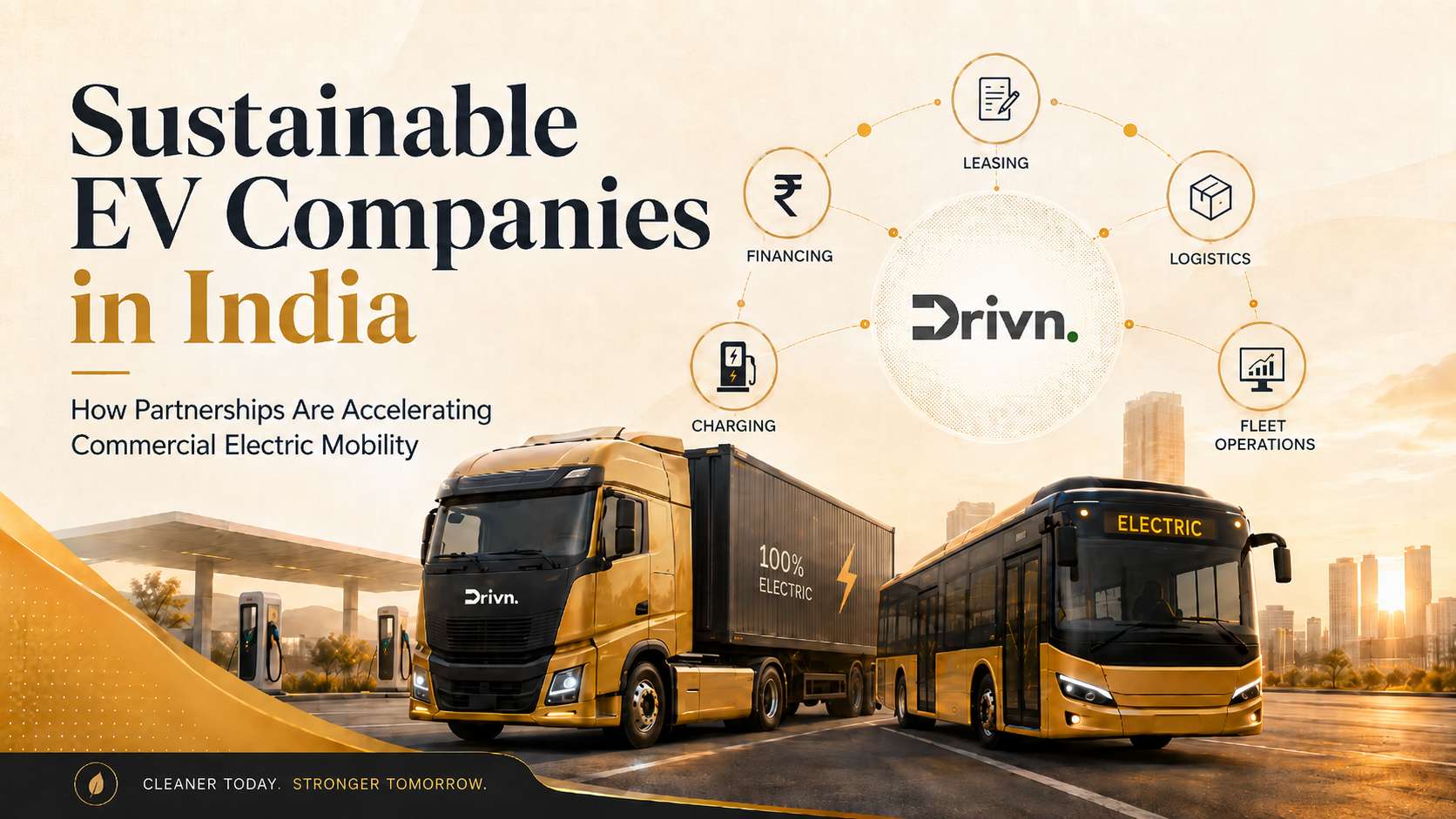
Sustainable EV companies in India are accelerating commercial electric mobility by partnering across the value chain. One of the known names, DRIVN, collaborated with Ashok Leyland and AVG Logistics to show how vehicle manufacturers, leasing platforms, and fleet operators can work together to make electric commercial vehicles easier to finance, deploy, and operate.
The shift is important because commercial electrification involves more than putting an electric vehicle on the road. Businesses also need access to suitable vehicles, financing, leasing options, and infrastructure.
Why Are Partnerships Important for Sustainable EV Companies in India?
Partnerships are important because commercial EV adoption requires more than the vehicle itself. Businesses also need access to financing, leasing, charging, maintenance, fleet management, and other services that support day-to-day operations.
Bringing these capabilities together can make the transition to electric mobility more practical and scalable. It also allows different players to focus on what they do best while working towards a common goal of increasing commercial EV adoption.
For sustainable EV companies in India, this collaborative approach can help bridge the gap between developing electric vehicles and putting them to productive use across real-world commercial applications.
What Partnerships Has DRIVN Built for Commercial EV Adoption?
DRIVN has built partnerships across different parts of commercial mobility, covering electric trucks, buses, logistics, financing, and leasing. These collaborations illustrate how commercial sustainable EV companies in India can contribute to different stages of fleet electrification.
|
Partner |
What the Partnership Supports |
|
Ashok Leyland |
Customised financing, leasing, and fleet ownership solutions for electric commercial vehicles |
|
AVG Logistics |
Deployment of up to 100 electric heavy-duty trucks for logistics operations |
|
JBM Electric Vehicles |
Supply of 500 electric buses, beginning with luxury intercity coaches |
|
Energy In Motion |
Deployment of approximately 1,000 electric heavy-duty trucks, combining vehicle, energy, leasing, and financing capabilities |
|
Tata Motors |
Exploring leasing-based deployment of Tata Motors’ electric commercial vehicles for fleet operators |
The partnerships cover different commercial applications rather than following a single deployment model. Together, they show how leasing and financing can connect electric vehicle supply with businesses looking to transition their fleets.
How Can Partnerships Make EV Adoption More Accessible?
The upfront cost of commercial EVs can be a consideration for businesses evaluating fleet electrification. Leasing and financing models offer an alternative to purchasing vehicles outright, allowing operators to structure access to electric vehicles around their business requirements.
The Ashok Leyland-DRIVN partnership, for example, is designed to provide customised financing, leasing, and fleet ownership solutions for electric vehicle customers. The stated objective is to reduce upfront capital requirements and provide greater flexibility for businesses adopting electric trucks.
The same principle extends to electric buses. The JBM Electric Vehicles and DRIVN partnership includes long-term financing, maintenance, and charging infrastructure alongside the planned deployment of 500 electric buses. This brings several parts of the adoption process together rather than treating vehicle procurement as a standalone transaction.
To Conclude
Partnerships are becoming an important part of India's commercial EV transition because they connect vehicle technology with financing, leasing, infrastructure, and real-world fleet operations. As sustainable EV companies in 2026 continue to evolve, collaborations such as those built by DRIVN show how different players can work together to make electric commercial mobility more accessible and scalable.
Frequently Asked Questions
Which companies are considered sustainable EV companies in India?
The category includes EV manufacturers, leasing and financing providers, fleet operators, charging companies, and businesses developing supporting mobility solutions. DRIVN, for instance, works with partners such as Ashok Leyland and JBM Electric Vehicles to support commercial EV deployment.
What are sustainable EV solutions in India?
They include electric trucks and buses, EV leasing, financing, charging infrastructure, fleet management, and other services that help businesses transition from conventional vehicles. The right solution depends on the type of fleet, operating requirements, and scale of deployment.
How is DRIVN supporting commercial EV adoption?
DRIVN supports commercial EV adoption through partnerships across the mobility ecosystem. Its collaboration with AVG Logistics, for example, involves deploying electric heavy-duty trucks for logistics operations, while its partnership with JBM Electric Vehicles focuses on electric buses.